
Pregnancy roughly doubles your iron requirement, and delivery can take months of stores with it. We treat iron deficiency before, during and after pregnancy, working alongside your OB.
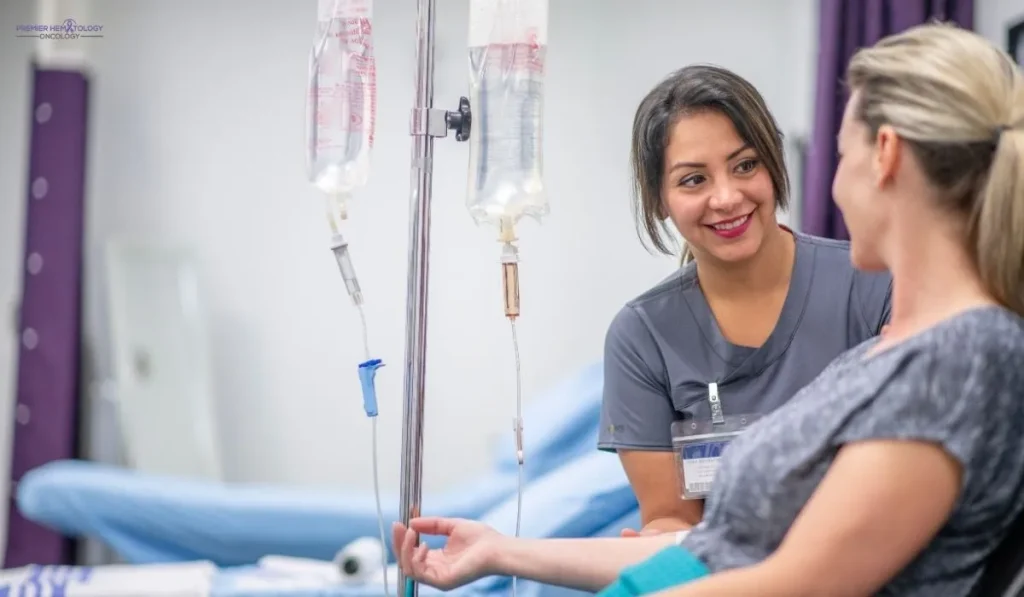
A pregnancy demands roughly 1,000 mg of additional iron to build maternal blood volume, the placenta and the baby’s own stores. Most women begin pregnancy without that much in reserve, which is why iron deficiency anemia affects a large share of pregnancies and why it often persists well past delivery.
Next-day appointments at our Sandy Springs clinic. No referral needed.
Book an AppointmentBlood volume expands substantially during pregnancy, and plasma expands faster than red cell mass. Some drop in hemoglobin is therefore expected and normal — it is called physiologic dilution. The thresholds used to separate that from true anemia are lower in the second trimester for exactly this reason: broadly, hemoglobin under about 11 g/dL in the first and third trimesters, and under about 10.5 g/dL in the second.
Hemoglobin alone still undersells the problem. Ferritin is the better guide to whether you actually have iron to work with, and a woman can sit at a “normal” hemoglobin with almost empty stores — particularly if she entered pregnancy after years of heavy periods or with pregnancies close together.
Untreated iron deficiency anemia in pregnancy is associated with preterm birth, low birth weight, greater blood loss tolerance problems at delivery, higher transfusion rates and a higher risk of postpartum depression. It is one of the more treatable risks in obstetrics, which is what makes missing it frustrating.
Oral iron remains the first-line treatment in pregnancy, and for many women it is enough. It falls short in three situations: when the deficiency is too large to close by mouth in the time remaining before delivery, when nausea or constipation makes the tablets impossible to keep taking, and when there is a gut condition — celiac disease, inflammatory bowel disease, or a prior bariatric surgery — limiting absorption.
Intravenous iron is generally reserved for the second and third trimesters, and is typically avoided in the first. It replaces a full deficit in one or two visits rather than months, which matters when there is a delivery date on the calendar. Modern formulations have a well-characterised safety profile in pregnancy, and the decision is always made jointly with your obstetrician rather than in isolation.
At our Atlanta clinic we review your prenatal labs, draw a complete iron panel on site, and give your OB a clear written plan. If IV iron isn’t the right answer, we say so.
Every delivery involves blood loss — more with a cesarean, considerably more with a postpartum hemorrhage. Layered on top of pregnancy’s existing draw on iron stores, and then breastfeeding, it is entirely possible to leave the hospital with a hemoglobin nobody flagged and stores near zero.
The symptoms get attributed elsewhere, and understandably so. Exhaustion, breathlessness, brain fog, hair shedding and low mood are all things new mothers are told to expect. When they are being driven by iron deficiency, they are also fixable — and postpartum iron deficiency has been linked to worse fatigue and higher rates of postpartum depression.
For a stable woman with postpartum anemia, IV iron is often preferable to transfusion: it corrects the underlying deficiency rather than only the hemoglobin, and it avoids transfusion-related risks. Where transfusion is genuinely needed, iron replacement still matters afterward, because a transfusion restores red cells without refilling the tank.
If you are more than six weeks out and still not recovering the way you expected, a ferritin level is a reasonable thing to ask for. We see patients at any point postpartum, including while breastfeeding.
We are a hematology practice, not a substitute for prenatal care. The most useful thing we do is take the iron problem off your OB’s plate with a specialist evaluation, on-site labs, and infusion capacity that most obstetric offices don’t have in-house.
Atlanta OB/GYN practices can refer directly through our physician referral form, and we aim to see referred patients within a day. Patients can also book themselves — no referral is required — and we will send a note back to your OB after the visit.
Our clinic is at 325 Hammond Drive, Suite 201, Atlanta, GA 30328, just inside the Perimeter in Sandy Springs. We see patients from across the metro — Sandy Springs, Buckhead, Dunwoody, Brookhaven, Chamblee, Vinings, Smyrna, Marietta, Roswell, Alpharetta, Johns Creek and Decatur — as well as women who drive in from elsewhere in Georgia for specialist iron care.
Consultations are available next day, lab work is drawn on site, and no physician referral is required. Call (770) 588-3570 or send us a message.
Intravenous iron is generally considered safe from the second trimester onward and is typically avoided in the first trimester. It is used when oral iron is not tolerated, not absorbed, or cannot close the deficit before delivery. The decision is made together with your obstetrician.
Commonly used thresholds are below about 11 g/dL in the first and third trimesters and below about 10.5 g/dL in the second trimester, reflecting normal plasma expansion. A ferritin level gives a better picture of iron stores than hemoglobin alone.
A single pregnancy requires roughly 1,000 mg of additional iron to support expanded maternal blood volume, the placenta, and fetal stores. Most women do not start pregnancy with that much in reserve, which is why deficiency is so common.
Persistent fatigue, breathlessness, brain fog and hair shedding beyond six weeks postpartum are frequently caused by iron deficiency from pregnancy plus delivery blood loss. A ferritin level and iron panel will show whether that is what is going on.
For a hemodynamically stable woman with postpartum anemia, IV iron is often preferred because it refills iron stores rather than only raising hemoglobin, and avoids transfusion-related risks. Transfusion remains appropriate for severe or unstable cases.
Yes. Intravenous iron is compatible with breastfeeding, and correcting a deficiency generally supports recovery and energy during the postpartum period. Bring your delivery records and any recent labs to your first visit.
The most common cause of iron deficiency in women, and how it is treated.
Midlife fatigue, brain fog and hair shedding with “normal” labs.
Coverage, prior authorization, and what to ask your plan.
A fuller walkthrough of iron needs across pregnancy.
What infusion therapy does and doesn’t do in the perinatal period.
For Atlanta OB/GYN practices referring into our clinic.