
Your doctor said you need IV iron — but where you receive it shapes how soon you're treated, how comfortable the visit is, and what shows up on the bill. Here's how a dedicated infusion center, a hospital outpatient department, and the emergency room compare.
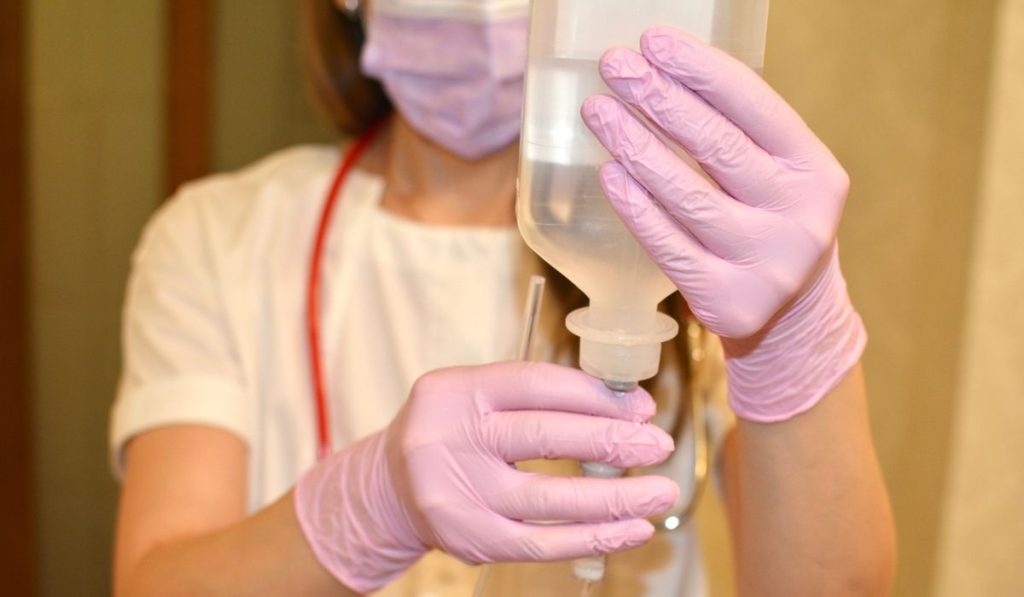
The IV iron itself — formulations like Injectafer (ferric carboxymaltose) — is the same medication wherever you go. What changes is everything around it: how long you wait for an appointment, who supervises your treatment, how the visit is billed, and whether anyone follows up on your iron levels afterward.
| Dedicated Infusion Center | Hospital Outpatient | Emergency Room | |
|---|---|---|---|
| Getting an appointment | Next-day consultations available | Scheduling lead times often run days to weeks | No appointment — but hours of waiting, and only appropriate for emergencies |
| Setting | Private, calm infusion suites designed for comfort | Shared clinical bays in a busy hospital wing | Emergency department, prioritized by acuity |
| Cost & billing | Office-based billing; benefits verified before your first visit | Often includes separate hospital facility fees | Typically the most expensive site of care |
| Medical supervision | Board-certified hematologists who manage your full care | Infusion nursing staff; your prescribing doctor is usually elsewhere | ER physicians focused on stabilizing emergencies |
| Follow-up care | Same team rechecks your labs and manages ongoing treatment | Referred back to your prescribing physician | None — discharge with instructions to see a specialist |
| Best for | Scheduled treatment of diagnosed iron deficiency | Patients whose care is already hospital-based | Severe, urgent symptoms only |
Comparisons reflect typical differences between sites of care; individual hospitals and plans vary. Always follow your physician's guidance.
If you're experiencing chest pain, shortness of breath at rest, fainting, or signs of active bleeding, go to the ER — that's exactly what it's for. But many people with iron deficiency end up in the emergency room simply because their fatigue became unbearable and they didn't know where else to turn. For non-emergency iron deficiency, the ER is the slowest and most expensive way to get treated, and it can't provide the ongoing care that actually resolves the underlying problem.
Hospital infusion departments deliver safe, competent care. The trade-offs are practical: scheduling queues shared with oncology and other high-volume services, busy shared infusion bays, and billing that often includes hospital facility fees on top of the medication and administration charges. If your care is already anchored at a hospital, staying there can make sense — but for a standalone iron infusion, you may wait longer and pay more for the same medication.
A dedicated infusion center exists to do one thing well. At Premier Hematology & Oncology, iron deficiency is a core specialty: board-certified hematologists evaluate your labs, prescribe the right formulation, and supervise your infusion in a private suite — then recheck your levels and adjust treatment over time. With locations across the New York metro area and Atlanta, next-day consultations, and insurance verified before your first visit, the entire experience is designed around getting you back to feeling like yourself.
Not necessarily. If you already have an iron IV referral from your doctor, we can schedule you right away. If you don't, our hematologists can evaluate your labs, confirm whether infusion therapy is appropriate, and prescribe it themselves — often with next-day consultation availability.
Most major insurance plans cover medically necessary iron infusions. Our team verifies your benefits before your first visit so you know what to expect. Office-based infusion care also typically avoids the separate facility fees that hospital settings often add.
Most modern IV iron formulations take about 15 to 60 minutes to administer, plus a short observation period. Depending on the formulation and your iron deficit, treatment may be completed in one or two visits.
Go to the emergency room for severe symptoms such as chest pain, shortness of breath at rest, fainting, or signs of active bleeding. For non-emergency iron deficiency, a scheduled outpatient infusion is faster to arrange, more comfortable, and far less expensive.
No — the same FDA-approved IV iron formulations are used across settings. The differences are in access, comfort, supervision, billing, and follow-up.
"Skip the long waits at hospitals and labs. At Premier Hematology, we perform treatments right on site — in a calm, comfortable environment."