
More than a hundred thousand babies are born in New York City each year, and a large share of those mothers finish pregnancy iron depleted. Most are never tested for it after the six-week visit.
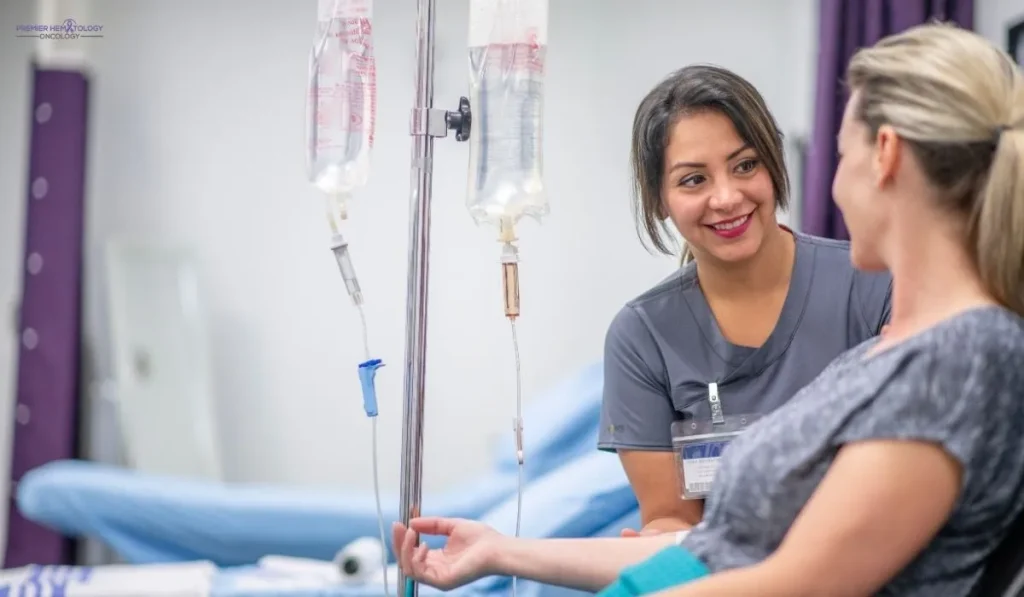
A single pregnancy requires roughly 1,000 mg of additional iron to expand maternal blood volume and build the placenta and the baby’s stores. Most women do not begin pregnancy holding that much in reserve, which is why iron deficiency is so common in pregnancy — and why it so often persists long past delivery.
14 centers across the New York metro area. No referral needed.
Book an AppointmentPrenatal care in New York is intensive and well organised. You are seen repeatedly, your bloods are checked, and problems are picked up. Then there is a six-week postpartum visit, and after that, for most women, nothing.
That is precisely when iron deficiency becomes visible. The immediate recovery is over, the adrenaline has worn off, and what remains is exhaustion that does not lift, breathlessness on the stairs, brain fog, and hair coming out in handfuls at three to four months.
All of which is exactly what new mothers are told to expect. So it goes unexamined, sometimes for years, and sometimes straight into the next pregnancy — which then starts from an even lower reserve.
The distinguishing feature is trajectory. Tiredness from broken sleep improves as the baby sleeps. Iron deficiency does not improve on its own, because nothing has refilled the tank.
Blood volume expands substantially in pregnancy, and plasma expands faster than red cell mass, so some fall in hemoglobin is normal — physiologic dilution. The thresholds account for it: broadly, below about 11 g/dL in the first and third trimesters, and below about 10.5 g/dL in the second.
Hemoglobin still understates the problem. Ferritin is the better guide to whether there is iron to work with, and a woman can sit at an acceptable hemoglobin with almost nothing in reserve — particularly after years of heavy periods or with pregnancies close together.
Untreated iron deficiency anemia in pregnancy is associated with preterm birth, low birth weight, higher transfusion rates at delivery and a greater risk of postpartum depression. Leaving it is not a neutral choice.
Oral iron remains first-line and is enough for many women. Intravenous iron is generally reserved for the second and third trimesters, and is used when tablets are not tolerated, not absorbed, or cannot close the deficit before the due date. That decision is made together with your obstetrician.
A vaginal birth loses around 500 mL of blood and a cesarean closer to 1,000 mL. A postpartum hemorrhage loses considerably more, and it is managed urgently and well in New York’s delivery units.
What happens less consistently is the follow-up. A transfusion raises hemoglobin, which is what it is for, but it does very little to restock your own iron reserve. Women are discharged with an acceptable count and an empty tank, and nobody rechecks.
For a stable woman with postpartum anemia, intravenous iron is often preferred over transfusion in the first place, because it corrects the underlying deficiency rather than only the number. Where transfusion was necessary, iron replacement still matters afterward.
If you had a significant bleed at delivery and no one has checked your ferritin since, that is worth requesting regardless of how long ago it was.
We are a hematology practice, not a substitute for prenatal or postpartum care. What we add is a specialist evaluation, on-site iron panels, and infusion capacity that most obstetric offices do not have in-house — without a hospital referral chain.
Practically, that means you can be seen quickly at whichever of our New York centers is nearest, whether you delivered in Manhattan, Brooklyn, Queens or on Long Island. We send a written plan back to your obstetrician after the visit.
Obstetric practices can refer directly through our physician referral form, and we aim to see referred patients quickly. Patients can also book themselves — no referral is required.
Intravenous iron is compatible with breastfeeding, and we see patients at any point postpartum.
14 infusion centers across Brooklyn, Queens, Manhattan, Staten Island, Long Island, Orange County and Rockland County — each with on-site lab work and next-day appointments.
25-31 30th Rd #1F
Astoria, NY 11102
3711 13th Ave
Brooklyn, NY 11218
5221 Foster Ave
Brooklyn, NY 11203
270 Doughty Blvd
Inwood, NY 11096
170 Great Neck Rd Ste 1
Great Neck, NY 11021
161-50 92nd St
Howard Beach, NY 11414
140-40 Queens Blvd
Jamaica, NY 11435
55 E 87th St #1D
New York, NY 10128
505 NY-208
Monroe, NY 10950
10 Johnsons Ln
New City, NY 10956
2 Medical Dr
Port Jefferson Station, NY 11776
163-03 Horace Harding Expy Lower Level
Fresh Meadows, NY 11365
1332 Rockland Ave
Staten Island, NY 10314
721 Flushing Ave (Lower Level)
Brooklyn, NY 11206
Intravenous iron is generally considered safe from the second trimester onward and is typically avoided in the first as a precaution. It is used when oral iron is not tolerated, not absorbed, or cannot correct the deficit before delivery, and the decision is made with your obstetrician.
Commonly used thresholds are below about 11 g/dL in the first and third trimesters and below about 10.5 g/dL in the second, reflecting normal plasma expansion. A ferritin level gives a better picture of iron stores than hemoglobin alone.
Persistent fatigue, breathlessness, brain fog and hair shedding beyond six weeks postpartum are frequently caused by iron deficiency from pregnancy plus delivery blood loss. A ferritin level and full iron panel will show whether that is the cause.
Usually yes. A transfusion raises hemoglobin but does little to restock your own iron reserve, so ferritin often remains low afterward and needs replacing separately.
Yes. Intravenous iron is compatible with breastfeeding, and correcting a deficiency generally supports energy and recovery in the postpartum period.
No referral is required to book at any of our New York centers. We do coordinate with your obstetrician and send a written plan back after your visit, because prenatal and postpartum iron management works best jointly.
The most common cause of iron deficiency in women.
Midlife fatigue with “normal” blood work.
Coverage and prior authorization, explained.
Why the tiredness does not lift on its own.
When each is the right answer after a hemorrhage.
For obstetric practices referring into our centers.