For a hemodynamically stable woman with postpartum anemia, intravenous iron is often preferred over transfusion, because it refills iron stores rather than only raising hemoglobin, and avoids transfusion-related risks. Transfusion remains the right answer for severe or unstable bleeding.
They do different jobs
A transfusion delivers donor red blood cells. It raises hemoglobin immediately, which is exactly what you want when someone is bleeding heavily or unstable. It is a rescue intervention and it saves lives.
What it does not do is restock your iron reserve. The transfused cells carry their own iron, but your ferritin — the store you rebuild from over the following months — is largely untouched. A woman can leave hospital with an acceptable hemoglobin and an empty tank.
Intravenous iron does the opposite. It works more slowly on hemoglobin — days to weeks rather than hours — but it replaces the deficit itself, which is what recovery actually runs on.
A transfusion fixes today’s number. Iron replacement fixes the reason the number fell. After a hemorrhage, many women need the second even if they had the first.
Where the line usually falls
The decision turns on stability and severity rather than the hemoglobin value alone.
- Transfusion — active or severe haemorrhage, haemodynamic instability, symptomatic severe anemia, or a situation where hemoglobin must rise now.
- Intravenous iron — a stable patient with iron deficiency anemia after the bleeding has stopped, where the priority is closing the deficit and restoring function.
- Both — common after a significant hemorrhage. Transfusion stabilises, then iron replacement rebuilds. Skipping the second step is the frequent omission.
Restrictive transfusion practice — transfusing less readily in stable patients — has become standard across medicine, and obstetric care has moved the same way. That shift is much of why IV iron has taken a larger role postpartum.
What IV iron involves postpartum
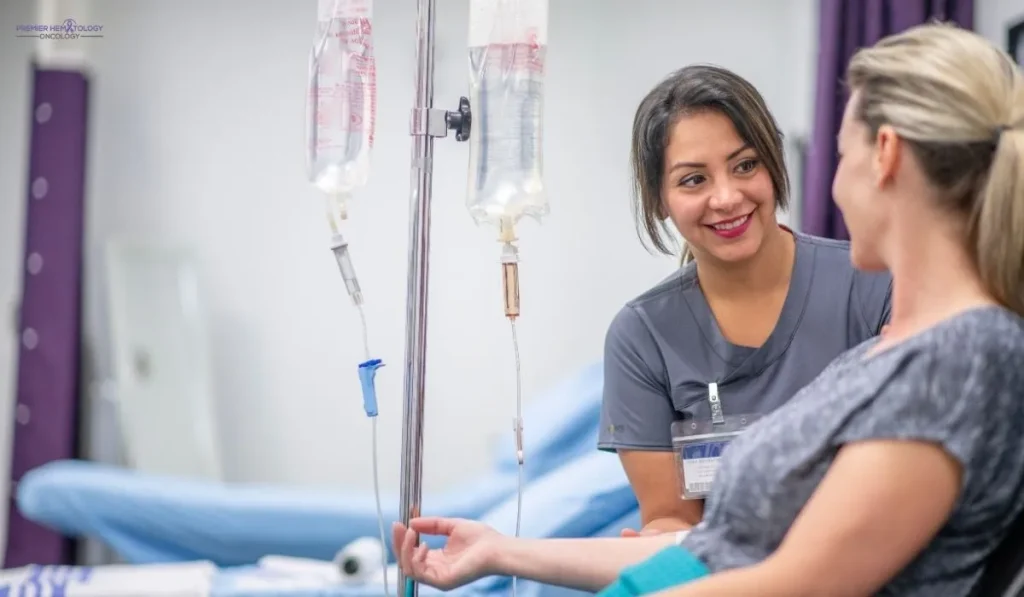
A visit runs 45 to 90 minutes depending on the product and dose, in a private bay with a nurse monitoring throughout, followed by a short observation period. Most women drive themselves home.
It is compatible with breastfeeding. Most patients notice energy improving within one to three weeks; hair regrowth follows the hair cycle and takes three to six months.
We recheck ferritin and hemoglobin six to eight weeks afterward to confirm the deficit closed, rather than assuming it did.
If you had a hemorrhage and nobody followed up
This is the gap we see most often. A woman has a significant postpartum bleed, is managed appropriately in hospital, is discharged — and no one checks her iron stores at six weeks or ever.
Months later she is exhausted, foggy, shedding hair, and being told it is new motherhood. Sometimes it is. Often there is a measurable, treatable deficiency underneath it.
If that describes your last year, ask for a ferritin level and a full iron panel. It is one blood draw, and it either rules the question out or answers it.
Frequently Asked Questions
Is an iron infusion better than a blood transfusion after delivery?
For a hemodynamically stable woman with postpartum anemia, IV iron is often preferred because it refills iron stores rather than only raising hemoglobin, and avoids transfusion-related risks. Transfusion remains appropriate for severe or unstable bleeding.
Do I still need iron after a transfusion?
Usually yes. A transfusion raises hemoglobin but does little to restock your own iron reserve, so ferritin often remains low afterward and needs replacing separately.
How quickly does IV iron raise hemoglobin?
Over days to weeks rather than hours, which is why transfusion is used when hemoglobin must rise immediately. Most patients notice energy improving within one to three weeks.
Can I have IV iron while breastfeeding?
Yes. Intravenous iron is compatible with breastfeeding and correcting the deficiency generally supports postpartum recovery and energy.
When should my iron be checked after a postpartum hemorrhage?
A ferritin level and iron panel around six weeks postpartum is reasonable, and worth requesting if it was not done. Persistent fatigue beyond that point is a reason to check regardless.
If you had a significant bleed at delivery and nobody has checked your stores since, that is worth correcting. Premier Hematology treats iron deficiency and women’s blood health across 14 centers in the New York metro area and at our Atlanta clinic in Sandy Springs. Next-day appointments, on-site lab work, and no referral required — call (718) 866-3037 in New York or (770) 588-3570 in Atlanta, or book a consultation. More on pregnancy and postpartum anemia care in New York or in Atlanta.