
Many home-birth midwives and freestanding birth centers require a client’s hemoglobin to be above a set level — commonly somewhere around 10 to 11 g/dL — when it is re-checked late in pregnancy, often around 36 weeks. Requirements vary by practice, so always confirm with the client’s own midwife or birth center. If her levels are low, start treatment early: oral iron can take months, while IV iron in the second or third trimester usually raises hemoglobin within a few weeks.
Why home birth and birth centers set a hemoglobin cutoff
Out-of-hospital birth works because it is reserved for low-risk pregnancies, and anemia is one of the factors that can shift a pregnancy out of that category. Some bleeding is expected at every birth: around 500 mL after a vaginal delivery. A postpartum hemorrhage is defined as a cumulative blood loss of 1,000 mL or more, or any bleeding with signs of significant blood loss.
A woman who starts labor with healthy hemoglobin has room to absorb that loss. A woman who starts anemic has much less, and is more likely to need a transfusion — something that can only happen in a hospital. A hemoglobin cutoff is how a midwife or birth center protects that margin.
So the requirement isn’t a box-ticking exercise. It is about whether there is enough reserve to make an out-of-hospital birth safe if bleeding is heavier than expected.
What the requirements usually look like
There is no single national standard. Each midwifery practice and birth center sets its own protocol, and some also look at ferritin, symptoms and the overall picture rather than one number. Patterns you’ll commonly see:
- A hemoglobin minimum somewhere in the range of about 10 to 11 g/dL, re-checked in the third trimester
- A repeat test around 34 to 36 weeks to confirm she still qualifies
- A transfer of care, or a planned hospital birth, if the level isn’t met
- Extra caution for clients with a previous postpartum hemorrhage or other risk factors
Because protocols differ, the most useful thing a doula can do early on is help the client ask her midwife or birth center exactly what their threshold is and when it will be checked. Then there’s a target and a deadline — and time to act.
The timing problem: iron pills are slow
Oral iron works, but slowly. Even when it’s absorbed well, hemoglobin typically rises by around 1 g/dL every two to three weeks, and refilling stores takes months. Many women can’t tolerate it at all: nausea, constipation and stomach pain are common, and in pregnancy they pile onto symptoms she already has.
That makes the calendar the real issue. A client found to be low at 28 weeks has time for a proper trial of oral iron and a re-check. A client found to be low at 34 weeks may not — and that’s the scenario where doulas most often call us.
If she’s low and her re-check is only weeks away, waiting to see whether the pills work is itself a decision — and often not the one she would choose.
How IV iron can help her get there in time
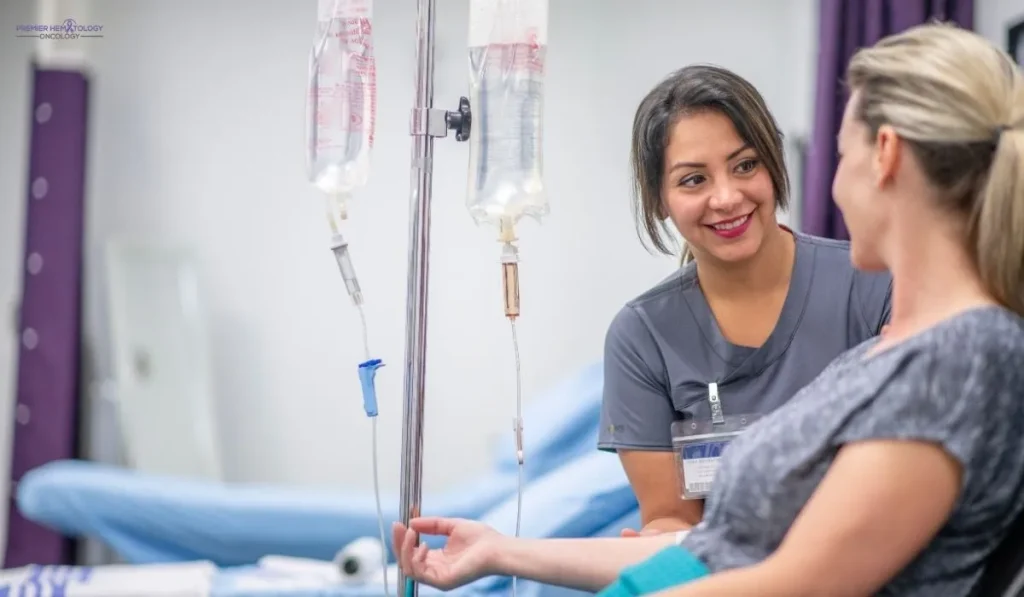
Intravenous iron delivers the full iron deficit directly into the bloodstream, bypassing the gut entirely. Depending on the formulation, that can be done in one or two visits of 30 to 90 minutes. It’s generally avoided in the first trimester, but widely used in the second and third when oral iron hasn’t worked or there isn’t time.
Hemoglobin usually starts climbing within one to two weeks and reaches its full effect at around four to six weeks. That timeline is why starting early matters: a client treated at 30 to 32 weeks is in a much better position by 36 than one treated at 35.
IV iron doesn’t guarantee she’ll meet a particular cutoff, and the decision about whether she remains eligible stays with her midwife or birth center. What it does is give her the best realistic chance — and leave her with real iron stores going into birth and the postpartum weeks. Read more in is IV iron safe during pregnancy?
What to do if a client is low
- Find out the target. Help her ask her midwife or birth center for their exact hemoglobin requirement and when it will be re-checked.
- Ask for a ferritin. If only hemoglobin was tested, a ferritin and iron panel will show how deep the deficit is.
- Make oral iron work better. Taking it away from calcium, tea, coffee and her prenatal vitamin can improve absorption — see iron pills making pregnancy worse?
- Don’t wait out the clock. If she’s past about 28 weeks and her numbers aren’t moving, a hematology visit now gives her options.
- Keep a plan B gently in view. Supporting a client through a change of birth place is part of the work too, and it’s easier when it isn’t a surprise.
Frequently Asked Questions
What hemoglobin level do you need for a home birth?
It varies by midwife, but many home-birth practices look for hemoglobin somewhere around 10 to 11 g/dL when it’s re-checked late in the third trimester, often around 36 weeks. Ask the client’s own midwife for her exact requirement.
What hemoglobin level do birth centers require?
Birth centers set their own protocols, and many use a minimum in a similar range of about 10 to 11 g/dL, confirmed with a third-trimester re-check. Some also consider ferritin and symptoms. Confirm the specific requirement with the birth center.
How can I raise my hemoglobin quickly before birth?
Oral iron raises hemoglobin slowly, around 1 g/dL every two to three weeks if it’s absorbed. When time is short in the second or third trimester, IV iron can replace the full deficit in one or two visits, with hemoglobin typically rising within one to two weeks and peaking at four to six weeks.
Can an iron infusion help me qualify for a birth center birth?
It often improves the odds if it’s started early enough, but it can’t guarantee a specific result, and eligibility is decided by the midwife or birth center. Being seen early in the third trimester gives the most time for it to work.
Is anemia a reason to transfer to a hospital birth?
It can be. Many out-of-hospital providers recommend a hospital birth when hemoglobin stays below their threshold, because anemia leaves less reserve if there’s heavy bleeding and a transfusion is only available in hospital.
If a client’s birth plan depends on a hemoglobin re-check, the most valuable thing is time — so get her levels looked at early. Premier Hematology sees pregnant and postpartum women with low iron at 14 centers across New York, usually within 24–48 hours, with on-site labs and no referral required — call (718) 866-3037 or book a consultation. Doulas can refer a client directly through our doula partner pathway.