
Intravenous iron is generally considered safe from the second trimester onward, and is typically avoided in the first. It is used when oral iron is not tolerated, not absorbed, or cannot close the deficit before delivery — and the decision is made jointly with your obstetrician, not in isolation.
Why the question comes up so often
Pregnancy requires roughly 1,000 mg of extra iron to expand maternal blood volume and build the placenta and the baby’s own stores. Most women do not start pregnancy holding that much in reserve, particularly after years of heavy periods or with pregnancies close together.
Prenatal vitamins help but rarely close a real deficit. So a large number of pregnancies reach the second or third trimester with a hemoglobin drifting down and a prenatal team weighing what to do about it.
That is where IV iron enters the conversation — and where a lot of understandable anxiety enters with it, because “infusion” sounds more serious than “tablet.”
What the trimester guidance is actually based on
First-trimester avoidance is a precautionary convention rather than a finding of harm. The first trimester is when organogenesis happens, and the standing principle across obstetric medicine is to avoid non-essential intravenous therapies during it where a safe alternative exists.
From the second trimester onward, modern intravenous iron formulations have a well-characterised safety profile in pregnancy, and are used routinely in obstetric practice internationally. Reactions are uncommon and infusions are given in a monitored setting.
The older reputation of IV iron comes from formulations largely retired from use. Judging today’s products by that history is like judging current anaesthesia by the 1970s.
When your OB will actually reach for it
- Oral iron has been tried and is not raising your levels
- Nausea, vomiting or constipation make prenatal iron impossible to keep taking
- The deficit is too large to close by mouth before your due date
- Absorption is limited — celiac disease, inflammatory bowel disease, or prior bariatric surgery
- A twin or higher-order pregnancy, where the iron demand is greater
- You are approaching delivery anemic, which raises the odds of needing a transfusion
That last point is the one that shifts the risk calculation most. Untreated iron deficiency anemia in pregnancy is associated with preterm birth, low birth weight, higher transfusion rates and a greater risk of postpartum depression. Doing nothing is not a neutral option.
The question is rarely “is IV iron safe in the abstract.” It is whether treating the deficiency carries less risk than leaving it — and by the third trimester, it usually does.
What the appointment involves
A first visit at our Atlanta clinic reviews your prenatal labs and draws a complete iron panel on site — ferritin, transferrin saturation, iron and TIBC alongside a CBC — so the picture is complete the same day rather than after weeks of back and forth.
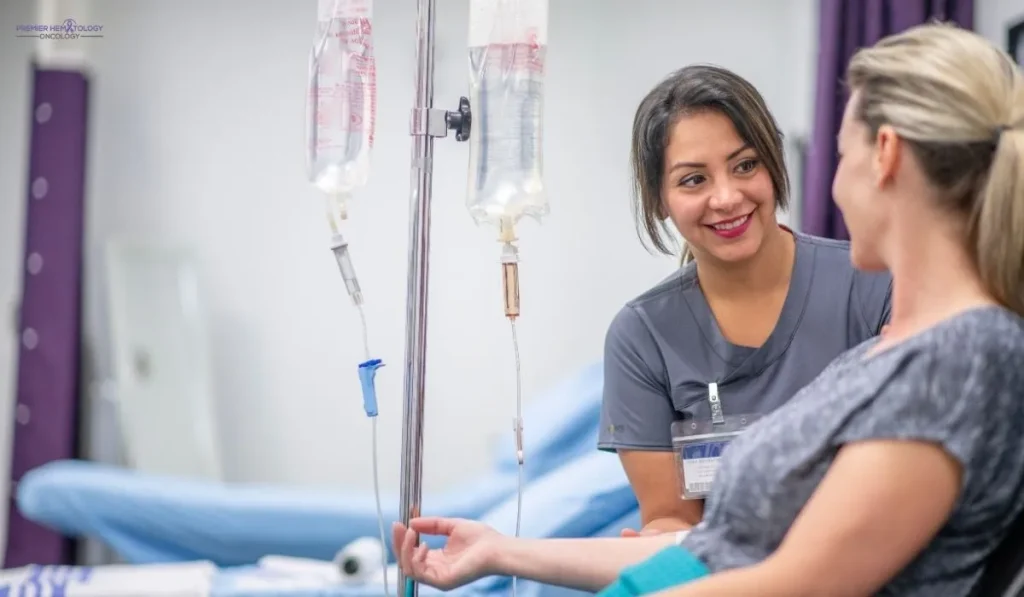
If an infusion is appropriate, it runs 45 to 90 minutes in a private bay with a nurse monitoring you throughout, followed by a short observation period. Most patients drive themselves home afterward and carry on with the day.
We send a written plan back to your obstetrician after the visit. If IV iron is not the right answer for you, we say so and explain what is.
Frequently Asked Questions
Is IV iron safe during pregnancy?
Intravenous iron is generally considered safe from the second trimester onward and is typically avoided in the first trimester as a precaution. It is used when oral iron is not tolerated, not absorbed, or cannot correct the deficit before delivery.
Which trimester can I have an iron infusion in?
Second and third trimesters are the usual window. First-trimester use is generally avoided as a precautionary convention rather than because of demonstrated harm.
Is IV iron safer than a blood transfusion in pregnancy?
For a stable patient with iron deficiency anemia, IV iron is generally preferred because it corrects the underlying deficiency rather than only raising hemoglobin, and avoids transfusion-related risks. Transfusion remains appropriate for severe or unstable cases.
Will an iron infusion affect my baby?
Correcting maternal iron deficiency supports fetal iron stores and is associated with better outcomes than leaving the deficiency untreated. Your obstetrician and hematologist make the decision together based on your labs and stage of pregnancy.
Do I need a referral from my OB?
No referral is required to be seen at our Atlanta clinic. That said, we coordinate with your obstetrician and send a written plan back after your visit, because prenatal iron management works best jointly.
If your prenatal labs show low iron and tablets are not working, it is worth a specialist opinion before delivery gets closer. Premier Hematology treats iron deficiency and women’s blood health across 14 centers in the New York metro area and at our Atlanta clinic in Sandy Springs. Next-day appointments, on-site lab work, and no referral required — call (718) 866-3037 in New York or (770) 588-3570 in Atlanta, or book a consultation. More on pregnancy and postpartum anemia care in New York or in Atlanta.